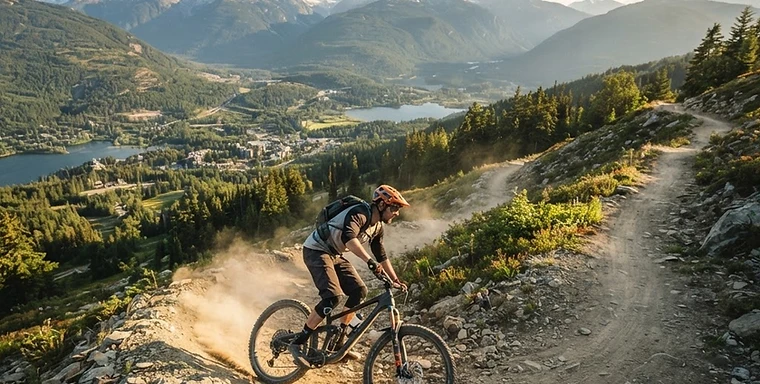
Welcome to our backyard! As a team based right here in Whistler, BC, we know exactly why this town is considered the beating heart of the global mountain biking scene. With four distinct zones and more terrain than any other park in North America, the Whistler Mountain Bike Park is the ultimate gravity-fed downhill experience.
Every summer, we welcome thousands of visitors to Canada, including international students, adventure travellers, and IEC working holiday makers who come to experience the impeccably built trails that extend from the peaks right down to the village. It is a bucket-list destination for any rider.
But downhill mountain biking is an extreme sport, and the reality of pushing your limits on roots, rocks, and massive jump lines is that crashes happen. While we always hope your trip is filled with nothing but high-fives and perfect dirt, it is crucial to understand what a trail crash can actually cost a visitor—and how to prepare for it.
The Reality of the Ride
The Whistler Bike Park is designed for progression, offering everything from beginner-friendly flow trails to double-black diamond technical descents. However, the speed and technicality of downhill riding mean that when wipeouts occur, they can be significant.
Common injuries in the park range from minor scrapes and bruises to more severe trauma, such as fractured collarbones, broken wrists, and dislocated shoulders. In more extreme cases, riders can suffer severe spinal cord injuries or concussions.
If you are a Canadian resident with provincial healthcare, a trip to the local clinic is mostly a matter of inconvenience and a ruined riding day. But if you are visiting from abroad, Canada’s healthcare system is not free. Without the right preparation, a single crash can lead to overwhelming out-of-pocket expenses.
Breaking Down the Costs: An Illustrative Look
To understand the financial impact of a mountain bike injury for an uninsured visitor, let’s look at an illustrative breakdown of what a crash could cost. Please note that these are not exact quotes, but rather realistic estimates of what international visitors might face when navigating the medical system without coverage.
- Mountain Extraction and Ambulance Transport: If you are injured on the mountain, Whistler Bike Park’s highly trained ski patrol will attend to you and bring you down to the base. While this on-mountain rescue is typically included, if your injury requires an ambulance transfer from the village to the Whistler Health Care Centre—or a transfer to a larger hospital in Vancouver—you will be billed for the ride. Ambulance fees for non-residents can easily range from several hundred to over a thousand dollars.
- Emergency Room Fees and Diagnostics: Simply being admitted to the emergency room as a non-resident comes with a baseline fee. Once you add in the cost of X-rays, CT scans, or MRIs to assess a fracture or head injury, your bill can quickly climb into the thousands before any treatment has even begun.
- Surgery and Hospitalization: If you suffer a complex fracture that requires orthopedic surgery—such as pins and plates for a shattered collarbone—the costs skyrocket. Operating room fees, surgeon fees, anesthesia, and overnight hospital stays can easily run into the tens of thousands of dollars.
- Flight Changes and Repatriation: A severe injury might mean you cannot fly home on your scheduled flight. You may need to purchase a new, expensive last-minute ticket. If your injury requires you to keep your leg elevated or travel with a medical escort, the cost of repatriation can be astronomical.
Gear Up and Ride Smart
The best way to handle a crash is to prevent it from happening in the first place. Whistler Mountain Bike Park has strict safety guidelines, and following them is your first line of defense.
- Wear the Right Gear: A full-face helmet is mandatory in the bike park, and for good reason. You should also invest in high-quality knee and elbow pads, and consider a chest or back protector for extra safety. If you don't own this gear, you can easily rent it in the village.
- Pre-Ride, Re-Ride, Freeride: This is the golden rule of the bike park. Always take a warm-up lap to inspect the trail conditions (Pre-Ride). Ride it a second time at a moderate pace to get a feel for the features (Re-Ride). Only once you are completely comfortable should you ride it at your full pace (Freeride).
- Ride Within Your Limits: It is easy to get caught up in the excitement and follow faster riders into terrain you aren't ready for. Stick to trails that match your skill level and progress slowly.
The Importance of Proper Protection
When you are planning your trip to Whistler, travel insurance shouldn't be an afterthought. However, it is vital to know that standard travel insurance policies often exclude high-risk adventure sports. If you are planning to ride the park, you need to ensure your policy specifically covers downhill riding.
Investing in comprehensive mountain biking insurance is just as important as renting a full-face helmet. It ensures that if you do take a tumble, you can focus entirely on your recovery rather than stressing over mounting medical bills. A good policy will help cover emergency medical expenses, hospital stays, and even the cost of getting you back home safely.
Whistler is an incredible outdoor playground, and your adventures might not stop at the bike park. If you plan to explore the Sea to Sky corridor further and scale the famous Stawamus Chief in Squamish, make sure you also look into rock climbing insurance to keep your entire trip protected.
See You on the Trails
Mountain biking in Whistler is an unforgettable experience that draws riders back year after year. By understanding the risks, riding responsibly, and ensuring you have the right coverage in place, you can drop into your favorite trails with total peace of mind.
Stay safe, ride smart, and enjoy everything our beautiful mountain town has to offer!