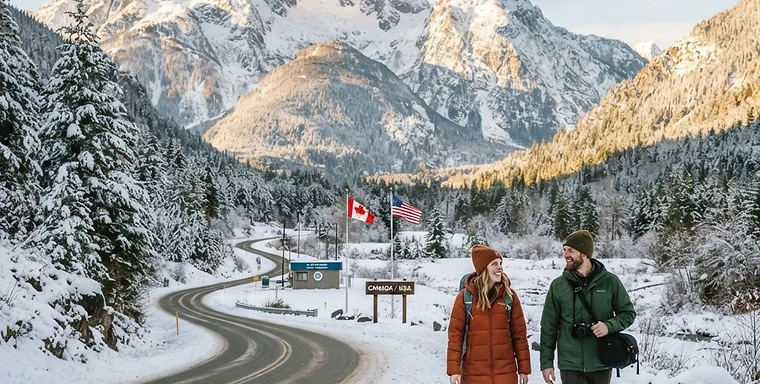
Here in Whistler, November brings a familiar, exciting chill to the air. The peaks are getting their first solid dustings of snow, and the village is buzzing with winter preparation. For many Canadians, this late-fall window signals a time of migration. Some of us are tuning our skis and snowboards, eyeing the weather systems down in the US Cascades or the Rockies for an early-season road trip. Others are packing up their RVs or booking flights south, ready to trade the incoming freezing temperatures for the sun-drenched warmth of Arizona, Florida, or California.
Whether you are an outdoor adventurer chasing the best winter conditions or a snowbird seeking a milder climate, travelling to the United States requires more than just a valid passport and a packed itinerary. There is a common, yet dangerous, misconception among many Canadians: the belief that our provincial health care plans will fully protect us once we cross the border.
Unfortunately, that safety net does not stretch nearly as far as you might think. Here is why relying solely on your provincial health plan when visiting the US leaves you financially exposed, and what you can do to protect yourself.
The Myth of the Provincial Safety Net
As Canadians, we are incredibly fortunate to have provincial government health insurance plans (GHIP) that cover our essential medical needs at home. Because we rarely see a hospital bill, it is easy to assume that if we get sick or injured abroad, our home province will simply pick up the tab.
In reality, when you travel outside of Canada, your provincial health care coverage pays for a shockingly small fraction of your medical expenses—generally less than 10% of the total out-of-country costs. The Canada Health Act ensures you have basic coverage, but the reimbursement rates are strictly capped at what the same service would cost back in your home province.
Crunching the Numbers: Canadian Coverage vs. US Costs
The United States has some of the highest healthcare costs in the world. A sudden illness or an unexpected injury on the slopes can result in a trip to a US hospital, where inpatient care can easily range from $10,000 to $100,000 USD or more per day, especially if intensive care is required.
Compare those illustrative US costs to what your province might actually reimburse you:
- British Columbia: The Medical Services Plan (MSP) typically pays up to $75 CAD per day for emergency in-patient hospital care outside the country.
- Ontario: OHIP may cover up to $400 CAD per day for inpatient services, which is often just a tiny fraction of a US hospital's daily room rate.
- Alberta: AHCIP generally covers up to $100 CAD per day for inpatient hospital services.
When a single day in a US hospital costs thousands of dollars, a $75 or $400 reimbursement leaves you responsible for a devastating financial shortfall.
Beyond the Hospital Bed: What Else Is Missing?
It is not just the hospital room rates that you need to worry about. Provincial health plans have strict limitations on the types of services they will cover outside of Canada. If you experience a medical emergency in the US, your provincial plan will typically provide zero coverage for:
- Ambulance services: A standard ground ambulance ride in the US can cost hundreds or even thousands of dollars.
- Air evacuation: If you are injured in a remote area and require a helicopter rescue or an air ambulance flight back to Canada, the costs can be astronomical.
- Prescription drugs: Medications prescribed and purchased outside of your home province are generally not covered.
- Dental emergencies: Accidental dental injuries are almost never covered by provincial plans abroad.
Chasing Winter Thrills Safely
For the outdoor and adventure community, the stakes are even higher. If your November plans involve heading south to carve up the slopes at Mount Baker, Jackson Hole, or the backcountry of the Pacific Northwest, the risk of physical injury naturally increases.
A twisted knee, a bad fall, or a collision on the mountain can instantly turn a dream ski trip into a logistical and financial nightmare. If you are venturing off the groomed runs, the cost of a mountain rescue and subsequent medical care falls entirely on your shoulders. This is why securing comprehensive travel insurance that specifically covers your planned activities is non-negotiable. If you plan to earn your turns outside the resort boundaries, ensure your policy includes coverage for activities like backcountry skiing so you can explore with peace of mind.
The November Snowbird Migration
November is also the prime departure month for Canadian snowbirds. If you are planning to spend the winter months in the US Sunbelt, travel insurance is a critical part of your seasonal preparation.
Older adults may have pre-existing medical conditions, making it vital to find a policy with clear, manageable stability requirements. It is also crucial to remember that your travel insurance is only valid if your provincial health care coverage remains active. Every province has residency rules dictating how many days you can spend outside the country without losing your GHIP status. If your provincial coverage lapses while you are away, your travel insurance could become void. Always check your province's specific rules before you depart, and look into dedicated snowbird coverage designed for long-term stays.
How to Bridge the Coverage Gap
To protect yourself from the massive financial risks of US healthcare, purchasing emergency medical travel insurance before you leave Canada is essential. Here is what to look for when building your plan:
- Comprehensive Emergency Medical: Ensure the policy covers hospital stays, physician fees, diagnostics (like X-rays and MRIs), and prescription drugs.
- Evacuation and Repatriation: Look for coverage that includes ground and air ambulance services, as well as the cost of transporting you back to Canada if medically necessary.
- Trip Interruption: Consider adding coverage that protects your financial investment if a medical emergency forces you to cut your trip short.
- Activity Coverage: Always verify that your specific outdoor pursuits—whether that is resort skiing, mountaineering, or mountain biking—are covered under the policy.
As the snow begins to fall and you finalize your winter travel plans, take a few moments to review your insurance needs. A well-chosen travel insurance policy is the lightest, most valuable piece of gear you can pack. Safe travels, and enjoy the adventures that await across the border!