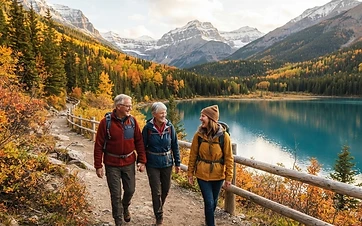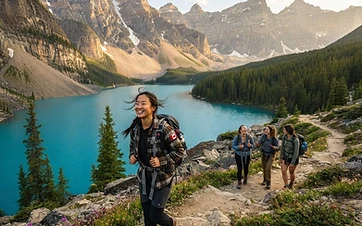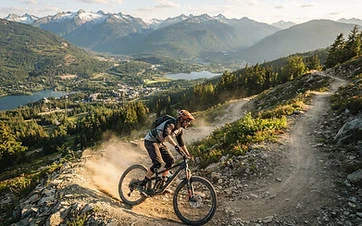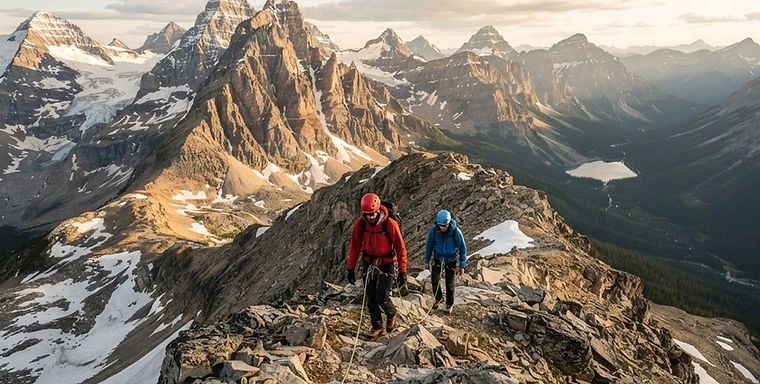
Welcome to the Canadian Rockies, a world-class playground for outdoor enthusiasts. With towering limestone peaks, breathtaking alpine vistas, and legendary routes, it is no surprise that climbers from around the globe flock to Alberta and British Columbia every summer. Whether you are an IEC working holiday holder spending your season in Banff, an international student taking a weekend road trip to Jasper, or an adventure traveller ticking off a bucket-list multi-pitch in Canmore, the Rockies offer an unforgettable experience.
However, amidst the excitement of packing your harness, sorting your rack, and planning your routes, there is a crucial detail that many international visitors overlook. It is a hidden gap that can turn a dream trip into a financial nightmare: the adventure sports coverage gap in standard travel insurance.
The Allure of the Rockies
The Canadian Rockies and Selkirk Mountains boast some of the most spectacular and challenging terrain in North America. From the accessible, beginner-friendly sport climbing crags at Tunnel Mountain and the Back of the Lake in Banff, to the imposing traditional alpine routes on Mount Louis, there is something for every skill level.
For many visitors, climbing here is the ultimate goal. The climbing season typically runs from May through September, with long daylight hours allowing for epic days on the wall. But the very things that make the Rockies so appealing—the remote locations, the rugged terrain, and the sheer scale of the mountains—also make them inherently risky.
The Coverage Gap Most Climbers Miss
When you purchase standard travel insurance for your trip to Canada, you might assume that you are covered for any injuries sustained during your vacation. Standard policies are fantastic for the average traveller. They step in to help with lost luggage, flight delays, and medical emergencies like a sudden illness or a sprained ankle on a paved sightseeing trail.
But here is the catch: standard travel insurance policies almost universally exclude high-risk or "hazardous" activities.
Many climbers mistakenly believe that because their policy covers "hiking" or "trekking," they are fully protected on the mountain. In reality, insurance providers draw a very distinct line between a casual hike and mountaineering.
How to Spot the Gap in Your Policy
If you are planning to climb, you need to look closely at the fine print. Here are the key factors that typically push an activity out of standard coverage and into the realm of adventure sports:
- The Use of Specialized Equipment: The moment you put on a harness, tie into a rope, or use specialized gear like crampons and ice axes, your activity is usually classified as rock climbing or mountaineering. If your policy only covers hiking, a rope is often the dividing line that voids your coverage.
- Altitude Limits: Many standard policies have strict altitude caps, often limiting coverage to elevations around 4,000 to 6,000 metres. While most peaks in the Canadian Rockies fall below this threshold (Mount Robson, the highest peak in the Canadian Rockies, is 3,954 metres), alpine mountaineering still carries unique risks that require specialized coverage regardless of the exact elevation.
- The Nature of the Terrain: Solo climbing, climbing without ropes (free soloing), and navigating glaciated terrain are almost always excluded from basic plans.
Why Proper Coverage Matters in Canada
If you are visiting Canada, your home country's health insurance will not cover you here. Even if you are a Canadian resident visiting from another province, your provincial healthcare plan may not cover all out-of-province expenses, such as specialized emergency transport.
In the Mountain National Parks, comprehensive rescue services are provided by Parks Canada's highly trained Visitor Safety Program Specialists. If you have a valid park pass, the actual search and rescue operation (including a helicopter extraction from a remote ledge) is typically covered.
However, the moment that rescue helicopter drops you off at a waiting ambulance, you are on the hook for the costs. Ambulance rides, emergency room fees, surgeries, hospital stays, and potential medical repatriation to your home country can be astronomically expensive. As an illustrative example, a multi-day hospital stay and surgery for a fractured ankle can easily run into the tens of thousands of dollars for an uninsured non-resident.
This is where specialized coverage comes in. As a Whistler-based team at Canada Travel Insurance (powered by TuGo), we understand the needs of the travelling adventurer. TuGo’s emergency medical policy offers an Adventure Sports Optional Coverage that specifically covers activities like rock climbing and mountaineering. It is designed to fill the exact gap that standard policies leave wide open, giving you peace of mind while you focus on the crux of your route.
For a deeper dive into how to protect your time on the wall, check out our comprehensive guide to rock climbing insurance.
Safety Tips for Climbing in the Rockies
Insurance is your safety net, but prevention is always the best strategy. The Canadian Rockies present unique hazards that require respect and preparation.
- Beware of Rockfall: The Rockies are famous for their stunning limestone, but this rock can be notoriously loose. Rockfall is one of the biggest hazards you will encounter in the summer. Always wear a helmet, even when you are belaying or hanging out at the base of the crag.
- Prepare for Rapid Weather Changes: Mountain weather is unpredictable. A sunny morning can quickly turn into a freezing afternoon thunderstorm. Always pack extra layers, a waterproof shell, and a headlamp.
- Carry the Right Gear: Never leave for a climb without your group gear, including a comprehensive first aid kit, a bivouac sack or small tarp, a map, a compass, and a repair kit.
- Communicate Your Plans: Always tell someone exactly where you are going, which route you are climbing, and when you expect to return. While you should carry a fully charged cell phone or a satellite communication device, never rely on them 100 percent, as cell service is notoriously spotty in the mountains.
Ready for Your Next Adventure?
The Canadian Rockies offer a lifetime of climbing adventures. By understanding the limitations of standard travel insurance and opting for the right adventure sports coverage, you can ensure that your trip remains memorable for all the right reasons.
Whether you are clipping bolts at a sunny sport crag or navigating a complex alpine ridge, knowing you are protected allows you to climb with confidence. And if you are planning to stick around for the winter to earn your turns in the backcountry, do not forget to look into backcountry skiing insurance to keep that coverage going year-round.
Stay safe, double-check your knots, and enjoy everything the Canadian mountains have to offer!