Welcome to the Canadian Rockies, a world-class playground for climbers, mountaineers, and alpine enthusiasts. From the iconic limestone faces of Banff and Jasper to the rugged granite spires of the Bugaboos, Canada offers some of the most breathtaking and challenging ascents on the planet. Here at Canada Travel Insurance (powered by TuGo), based in the adventure hub of Whistler, BC, we see thrill-seekers from all over the globe arrive with big dreams and heavy gear bags.
But whether you are an international student taking a semester break, a visitor on an International Experience Canada (IEC) working holiday visa, or a seasoned adventure traveller, there is a crucial detail that often gets left out of the trip planning process. It is a coverage gap that most climbers miss until it is too late: standard travel insurance policies rarely cover technical alpine activities.
The Coverage Gap: Hiking vs. Climbing
When you purchase a standard travel insurance policy, it is typically designed for the average vacationer. These base-level plans are perfect for sightseeing, city breaks, and casual day hikes. However, the moment your activity requires specialized equipment, the rules change.
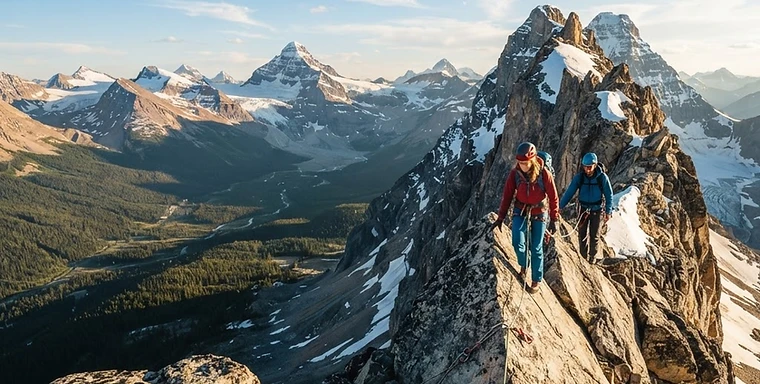
Insurance providers generally differentiate between a strenuous hike and mountaineering based on the gear you use. If your route requires ropes, harnesses, cams, or ice axes, you have crossed the line into what insurers classify as hazardous or technical sports. Standard policies almost universally exclude these activities. This means that if you take a lead fall on a sport route or twist an ankle while navigating a glacier, a basic travel insurance plan will likely deny your medical claim.
Why Visitors and IEC Holders Need to Pay Attention
If you are visiting Canada, it is vital to understand that our country’s world-renowned public healthcare system does not cover non-residents. Visitors, international students, and IEC working holiday makers are entirely responsible for their own medical costs.
While IEC visa holders are required to have health insurance for the duration of their stay, many simply purchase the cheapest, most basic plan available to satisfy the border requirements. Unfortunately, these basic plans are exactly the ones that exclude rock climbing and mountaineering. If you plan to spend your weekends projecting routes in the Bow Valley or exploring the local crags, that basic visa insurance will not protect you on the wall.
The Real Cost of an Alpine Emergency
In the backcountry, a minor injury can quickly escalate into a major logistical challenge. If you are injured on or off the mountain, you cannot simply call a taxi to the nearest clinic. You may require a specialized search and rescue operation, an emergency medical evacuation by helicopter, or an off-road ambulance transport.
These services are incredibly expensive. Visitors are responsible for all costs associated with hospital visits, doctor services, and emergency evacuations. Together, these expenses can easily run into the tens of thousands of dollars. Without the right coverage, a single misstep could leave you footing a massive bill out of your own pocket, turning a dream climbing trip into a financial nightmare.
Bridging the Gap: Adventure Sports Coverage
The good news is that getting the right protection is straightforward once you know what to look for. To ensure you are protected on the wall, you need to upgrade your policy with specialized coverage.
For the travelling adventurer, we recommend looking into TuGo’s Adventure Sports Optional Coverage. This type of add-on is specifically designed to cover the high-risk activities that standard policies exclude. By adding this to your emergency medical insurance, you can get comprehensive coverage for rock climbing, mountaineering, and ice climbing.
It is also important to match your insurance to your specific itinerary. If you are planning a multi-sport trip, make sure every activity is listed. For example, if you are visiting in the shoulder season and plan to mix your sports, you will want to secure proper rock climbing insurance for the crag, and ensure you have backcountry skiing insurance before you head up to the alpine bowls.
A Climber’s Checklist for Travel Insurance
Before you chalk up and tie in, review your travel insurance policy and ask yourself the following questions:
- Is my specific activity listed? Do not assume general outdoor activities cover climbing. Look for explicit mentions of rock climbing, mountaineering, or ice climbing in the covered activities list.
- Are there altitude limits? Many policies restrict coverage to a certain elevation (for example, up to 3,000 metres or 6,000 metres). Check the elevation of your planned summits to ensure you will not exceed the policy limit.
- Does it cover emergency evacuation? Ensure the policy explicitly covers ambulance services and emergency air evacuation, which usually must be pre-approved by the insurer.
- Are there gear exclusions? Understand the difference between medical coverage and baggage coverage. While your medical bills might be covered, standard baggage limits might not fully reimburse you for a lost rack of cams or expensive climbing ropes.
Climb with Peace of Mind
At Canada Travel Insurance, we believe that the best trips are the ones where you can fully immerse yourself in the experience. The Canadian Rockies are waiting to be explored, and we want you to focus on the crux of your route, not the fine print of your medical bills.
By understanding the coverage gap and opting for the right adventure sports protection, you can tie into the sharp end of the rope with confidence. Climb safe, double-check your knots, and enjoy everything the Canadian alpine has to offer!