September has arrived, and here in Whistler, the crisp morning air is a gentle reminder that the seasons are shifting. For many, early fall is a time of transition—snowbirds are beginning to map out their winter escapes, international students are settling into their new Canadian campuses, and winter sports enthusiasts are already dreaming of fresh powder. But if you are not quite ready to let go of summer, September offers a spectacular, fleeting window for late-season white-water rafting.
Canada is home to some of the most breathtaking river systems in the world. Whether you are an IEC working holiday holder looking for one last summer thrill, or a Canadian exploring outside your home province before the snow flies, rafting offers an unforgettable perspective of the wilderness. Two of the most iconic destinations are the Kicking Horse River in British Columbia and the Tatshenshini River, which winds through the Yukon, BC, and Alaska.
However, before you grab a paddle and a wetsuit, it is crucial to understand the river grading system and how it impacts your travel coverage.
The Kicking Horse River: A Rocky Mountain Classic
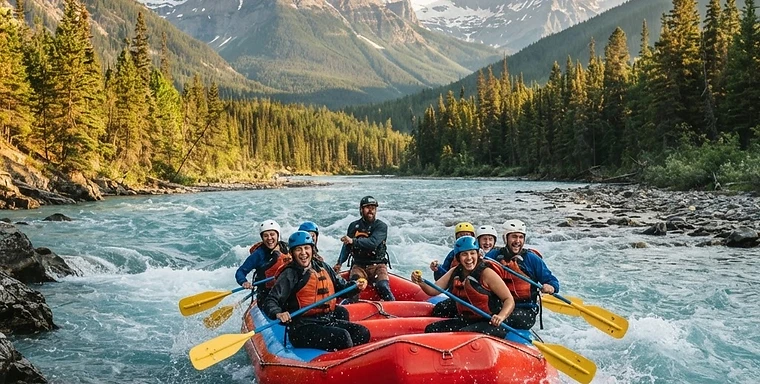
Located in the heart of the Canadian Rockies near Golden, BC, the Kicking Horse River is famous for its thrilling rapids and stunning glacial-blue waters. It is a highly accessible river that caters to a wide range of experience levels.
- The Experience: The river is typically divided into sections. The upper and middle sections offer bouncy, fun Class I to III rapids that are perfect for beginners and families.
- The Thrill: The lower canyon steps things up with continuous, roaring Class IV rapids.
- Late Season Rafting: In September, the water levels generally drop as the glacial melt slows down. This can make the rapids slightly more technical, requiring precise navigation through exposed rocks, all set against a beautiful backdrop of autumn foliage.
The Tatshenshini River: A Remote Wilderness Expedition
If the Kicking Horse is a thrilling day trip, the Tatshenshini is the expedition of a lifetime. Flowing through the Tatshenshini-Alsek Provincial Park and eventually merging with the Alsek River in Alaska, this journey takes you through one of the most pristine, untouched wilderness areas on the planet.
- The Experience: Trips here often last over a week, navigating past massive glaciers, deep canyons, and floating icebergs.
- The Rapids: The Tatshenshini is generally characterized by Class II and III rapids, making it manageable for multi-day expedition rafts. However, certain sections—especially during high water or in specific canyons—can push into Class IV territory.
- Cross-Border Travel: Because this river crosses from Canada into the United States (Alaska), it requires careful logistical planning, including passports, permits, and appropriate cross-border travel protection.
Understanding the Whitewater Grading System
To understand how rafting interacts with your travel coverage, you first need to understand the International Scale of River Difficulty.
- Class I-II (Easy to Novice): Fast-moving water with riffles and small waves. Very low risk.
- Class III (Intermediate): Rapids with moderate, irregular waves. Maneuvering is required, but it is generally safe and fun for guided beginners.
- Class IV (Advanced): Intense, powerful, but predictable rapids requiring precise boat handling in turbulent water. There is a moderate to high risk of injury if you fall out.
- Class V-VI (Expert to Extreme): Extremely long, obstructed, or violent rapids. Class VI is considered un-runnable for most.
Why is Grade IV+ Excluded from Travel Insurance?
If you are reviewing your policy before a trip, you might notice that while standard white-water rafting is often covered up to Grade III, anything Grade IV or higher is typically excluded.
Why the sudden cutoff? It comes down to how insurance providers assess risk.
Travel insurance is designed to protect you from unforeseen, sudden emergencies. When you participate in standard recreational activities (like a guided Class II-III float), the statistical likelihood of a severe injury is relatively low.
However, once a river hits Class IV, it crosses the threshold into what the insurance industry considers a "hazardous" or "extreme" sport. The water is significantly more powerful, the rocks are less forgiving, and the chance of a raft flipping increases dramatically.
Furthermore, rivers with Class IV+ rapids are often located in deep canyons or remote wilderness areas—like the Tatshenshini. If you sustain an injury in a Class IV rapid, you don't just need an ambulance; you might need a highly complex, incredibly expensive helicopter evacuation from a remote gorge. Because the risk of severe injury and the cost of emergency medical evacuation are exponentially higher, standard policies exclude these grades to keep premiums affordable for the average traveller.
Smart Planning for Your Fall Adventure
If you are planning to hit the water this September, here are a few tips to ensure you are prepared:
- Ask the Outfitter: Before booking, ask the rafting company what class of rapids you will be running. Many commercial outfitters specifically design their trips to stay within Class III limits to accommodate general tourists.
- Check Your Coverage: Always read your policy wording. If you are an international student taking a weekend trip, ensure your student plans cover the specific activities you want to try.
- Consider Your Destination: If you are a Canadian heading to the Tatshenshini and crossing into Alaska, remember that your provincial health care won't cover you in the US. You will need coverage designed for Canadians leaving Canada to protect against high American medical costs.
- Dress for the Season: September water is cold! Ensure your outfitter provides thick wetsuits, neoprene booties, and splash jackets.
Whether you are a visitor exploring the Rockies with visitors to Canada insurance or a local soaking up the last rays of autumn, white-water rafting is a phenomenal way to experience the wild beauty of this country. Just remember to respect the river, know your limits, and always travel protected.