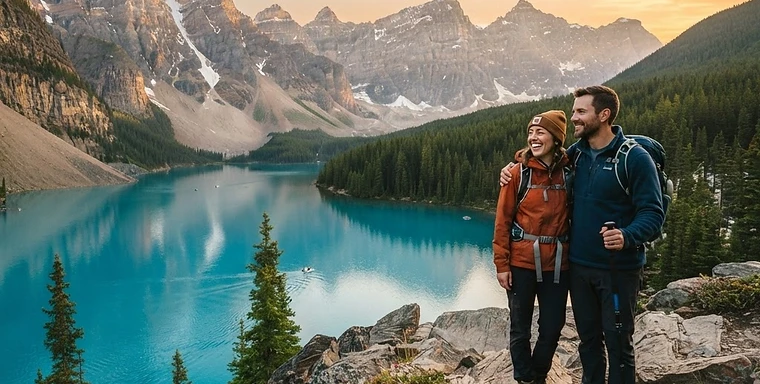
Here in Whistler, BC, September brings a crisp edge to the morning air. The leaves are beginning their vibrant transition, and for many Canadians, this seasonal shift signals the start of travel planning. You are likely falling into one of two camps right now: dusting off your gear for the upcoming winter sports season, or counting down the days until you can escape the snow entirely.
But whether you are a snowbird migrating to a milder climate in October or a powder-hound planning a November trip to the Rockies, there is a crucial detail many travellers overlook. It is the gap between out-of-province medical coverage and travel insurance.
The Myth of Universal Canadian Coverage
There is a common, comforting misconception among Canadians: "I have my provincial health card, so I am fully covered anywhere in Canada."
It is a lovely thought, but it is only partially true. Under the Canada Health Act, Canadian residents are entitled to basic medical coverage when travelling within the country. Thanks to reciprocal medical billing agreements, if you break your arm in Alberta but live in Ontario, the hospital will generally bill your home province directly. (It is worth noting that Quebec operates a bit differently, often requiring you to pay upfront and submit a claim for reimbursement later).
Because of this system, many travellers assume they don't need to think about insurance unless they are crossing an international border.
The Gap Most Canadians Miss
So, what exactly is the problem? The gap lies in how each province defines a "basic" medical service. Provincial health plans cover physician services and standard hospital room costs. However, they do not cover a wide range of emergency services and supplemental treatments that can quickly add up after an accident or sudden illness.
Here is what your provincial health plan likely will not cover when you travel out-of-province:
- Ambulance Services: Whether it is a standard ground ambulance or a highly specialized air ambulance from a remote area, these transportation costs are rarely covered outside your home province.
- Prescription Medications: If you are discharged from an out-of-province hospital and need painkillers or antibiotics, you will likely be paying for those prescriptions out of pocket.
- Medical Equipment: Crutches, casts, splints, and wheelchairs are typically excluded from reciprocal agreements.
- Emergency Dental: If you chip a tooth on a frozen protein bar while hiking, your provincial plan usually will not help with the dental bill.
- Return to Home Transportation: If your injury requires a medical escort or a specialized flight back to your home province for ongoing care, the financial burden is entirely yours.
To put things in perspective, an air ambulance evacuation from a rural area to a major hospital can easily cost thousands of dollars. Even a standard ground ambulance in a different province can result in a bill of several hundred dollars. While these costs are illustrative, they highlight how quickly out-of-pocket expenses can escalate when you are away from home.
Scenario 1: The Snowbird Migration
As we move through fall, thousands of Canadian snowbirds are finalizing their departure plans for October and November. While many head south to the United States or Mexico, a growing number choose to spend their winters in milder Canadian destinations, such as Vancouver Island or the Okanagan Valley.
Even if you are staying strictly within Canada's borders for the winter, a simple slip on an icy sidewalk or a sudden illness could lead to unexpected expenses. Securing proper snowbird coverage ensures that those out-of-province gaps are seamlessly filled. It provides peace of mind, letting you enjoy your winter retreat without the looming worry of unexpected medical bills.
Scenario 2: The Winter Adventurer
For thrill-seekers, fall is the time to prep gear, buy passes, and book trips. If you are leaving your home province to tackle bigger mountains, the stakes are inherently higher.
A standard provincial health plan will not cover the cost of a mountain rescue or an air ambulance if things go sideways in the alpine. If your winter plans include backcountry skiing in a neighbouring province, supplemental travel insurance is just as essential as your avalanche beacon, shovel, and probe. Domestic travel insurance acts as a vital safety net, ensuring that a bad day on the mountain doesn't turn into a financial disaster.
What About Non-Residents?
Of course, this out-of-province gap primarily affects Canadian residents who rely on provincial health care. If you are an international student, an IEC working holiday maker, or simply visiting family in Canada for the holidays, you likely do not have a provincial health card to fall back on at all.
For visitors and temporary residents, comprehensive travel insurance isn't just about filling gaps—it is about building a complete safety net from the ground up. Without it, you are responsible for the entirety of your medical bills, from the doctor's consultation to the hospital bed.
Bridging the Gap with Travel Insurance
The good news is that travel insurance designed specifically for domestic trips is often surprisingly affordable. Because it only needs to cover the services your provincial plan excludes, the premiums are generally lower than international plans. It acts as a secondary layer of protection. Instead of worrying about whether a specific treatment is covered under your home province's fee schedule, you can focus entirely on your recovery.
Tips for Fall Travel Preparation
As you finalize your itineraries this September, keep these simple tips in mind:
- Review your provincial plan: Take ten minutes to check your home province's health website. Know exactly what is covered and what is excluded when you travel domestically.
- Check your credit card benefits: Some premium credit cards offer domestic travel insurance, but you must read the fine print carefully. They often have strict limits on trip duration, age restrictions, or require you to book the entire trip on that specific card.
- Pack for the season: Whether it is organizing extra layers for the ski hill or ensuring you have enough of your regular prescriptions for a long snowbird stay, early preparation significantly reduces travel stress.
As the September days grow shorter, the excitement for winter travel naturally grows. Whether you are chasing the snow across the country or running away from it to a warmer coast, do not let the myth of universal out-of-province coverage catch you off guard. A little preparation now ensures that your only surprises this winter are good ones. Safe travels!