
October has arrived here in Whistler, bringing crisp mountain air and the first dustings of snow on the peaks. For many, this season signals a time of transition. Canadian snowbirds are finalizing their departure plans for warmer climates, while locals and international visitors are gearing up for the upcoming ski season. But fall is also the perfect quiet time to sit down with your family and start planning next summer’s grand Canadian adventure.
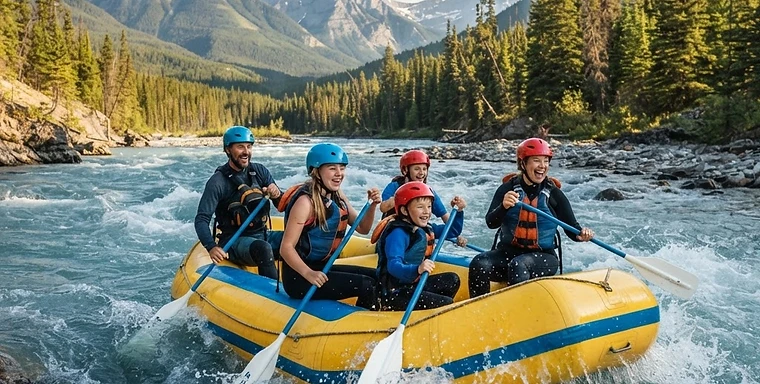
If you are looking for an unforgettable bonding experience, white-water rafting should be at the top of your list. Canada boasts some of the most spectacular river systems in the world, offering everything from gentle floats to heart-pounding thrills. Two of the most iconic destinations for this are the Kicking Horse River and the Tatshenshini River.
However, before you book that thrilling family excursion, it is crucial to understand how river rapids are classified and how those classifications impact your travel safety and insurance coverage.
The Magic of the Kicking Horse and Tatshenshini Rivers
When it comes to rafting in Western Canada, families are spoiled for choice.
The Kicking Horse River, located near Golden, British Columbia, is famous for its accessibility and stunning Rocky Mountain scenery. It offers a variety of sections suitable for different experience levels. The upper sections provide a calm, scenic float perfect for younger children, while the middle canyon introduces exciting but manageable waves.
For families with older teenagers looking for a truly remote wilderness experience, the Tatshenshini River offers an epic journey. Flowing through the pristine wilderness of British Columbia, the Yukon, and into Alaska, a trip down the "Tat" is often a multi-day expedition. You will navigate past massive glaciers, spot incredible wildlife like grizzly bears and bald eagles, and disconnect entirely from the modern world. It is a profound way to bond as a family, far away from the distractions of cell service and daily routines.
Understanding River Classifications
To ensure your family has a safe and enjoyable time, you need to understand the International Scale of River Difficulty. Rivers are graded from Class I to Class VI based on the technical difficulty and risk involved.
- Class I (Easy): Fast-moving water with riffles and small waves. Very relaxing and requires little maneuvering.
- Class II (Novice): Straightforward rapids with wide, clear channels. You might get splashed, but it is generally very safe for beginners.
- Class III (Intermediate): Rapids with moderate, irregular waves. These require complex maneuvers and good boat control. It is thrilling but manageable for most active families with a professional guide.
- Class IV (Advanced): Intense, powerful, but predictable rapids requiring precise boat handling in turbulent water.
- Class V (Expert): Extremely long, obstructed, or very violent rapids. These pose a significant risk and are strictly for adrenaline junkies and highly experienced paddlers.
- Class VI (Extreme/Exploratory): These runs have almost never been attempted and often exemplify the extremes of navigability.
Why Grade IV+ Rapids Are Excluded from Standard Coverage
When planning your trip, you might wonder why standard travel insurance policies often exclude coverage for Grade IV and higher rapids. The answer lies in the transition from "adventure" to "extreme" sports.
Activities like Class I-III rafting, hiking, and snorkeling are generally considered standard adventure activities. They carry a moderate level of risk that is easily mitigated by wearing a life jacket and following a guide's instructions.
However, once you enter Class IV territory, the risk profile changes dramatically. The water is more turbulent, the chance of the raft capsizing increases significantly, and the likelihood of sustaining an injury that requires complex medical evacuation spikes. Because of this elevated risk, standard policies exclude these extreme activities to keep premiums affordable for the average traveller.
If your family is planning to tackle these more intense waters, you will need to look into specialized white-water rafting coverage or an extreme sports add-on to ensure you are protected in case of an emergency.
Seasonal Transitions: From Rivers to Slopes
As we embrace the October chill, it is worth noting that this same principle of risk classification applies to winter sports. Just as Grade IV rapids are excluded from standard policies, venturing out of bounds on the ski hill carries similar insurance implications.
If you are an international student or a visitor on an IEC working holiday visa preparing for the winter season, remember that standard coverage usually protects you on groomed, in-bounds resort runs. If you plan to explore untouched powder, you will need specific coverage for activities like backcountry-skiing.
Protecting Your Family's Travel Dreams
Whether you are a family of visitors to Canada insurance holders planning a summer river trip, or you are looking into snowbird coverage before heading south for the winter, understanding your policy is the most important step in trip preparation.
Travel insurance is not just a piece of paper; it is your safety net. It ensures that if a family member sprains an ankle on a riverbank or needs medical attention while travelling outside their home province, you won't be left facing overwhelming out-of-pocket medical expenses.
Take the time this fall to research your activities, understand the risks, and choose the right coverage. That way, when you finally push off the riverbank into the pristine waters of the Kicking Horse or Tatshenshini, the only thing you will need to focus on is the adventure ahead. Always read your policy wording carefully before you travel, and if you are ever unsure whether a specific activity is covered, reach out to your insurance provider for clarification. Safe travels, and enjoy the beautiful transition into the winter season!