The Anticipation of Winter in British Columbia
September has arrived in British Columbia, and with it comes a distinct shift in the mountain air. Here in Whistler, the mornings are crisper, the leaves are beginning their vibrant autumnal display, and the local coffee shops are buzzing with a familiar, seasonal excitement. Winter is coming. For those immersed in mountain culture, fall is not just a transition of weather; it is the season of preparation. It is the time when gear is inspected, physical training ramps up, and dreams of untouched, waist-deep powder begin to take shape.
For many winter enthusiasts—whether you are an international student experiencing your first Canadian winter, an IEC working holiday maker, or a visitor drawn to the legendary peaks of the Great White North—resort skiing is just the beginning. The ultimate bucket-list adventure? Heli-skiing in the remote, pristine backcountry of British Columbia.
The Unmatched Allure of Heli-Skiing
British Columbia is widely considered the heli-skiing capital of the world. The province offers millions of acres of exclusive terrain, characterized by massive glaciers, perfectly spaced old-growth forests, and some of the deepest, most consistent snowfall on the planet.
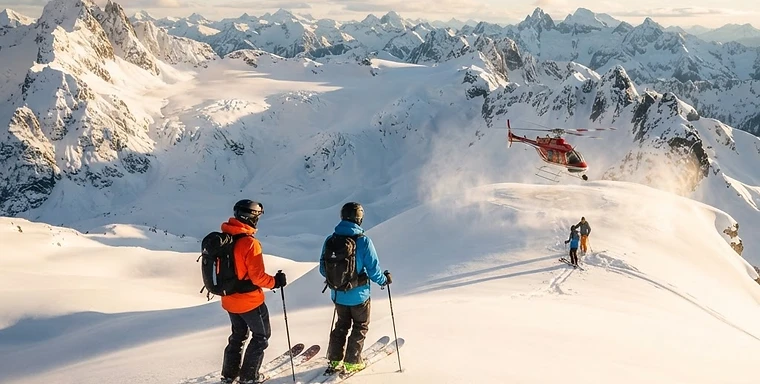
Unlike a typical day at a ski resort, heli-skiing removes the crowds, the lift lines, and the tracked-out snow. Instead, a helicopter serves as your personal chairlift, dropping you and a small group of riders at the summit of a remote peak. The silence at the top is profound, broken only by the sound of the helicopter fading into the distance and the click of your bindings. From there, it is just you, your guide, and thousands of vertical feet of pristine, untouched snow.
It is an experience deeply woven into the fabric of Canadian mountain culture. However, venturing into these remote alpine environments requires more than just strong skiing legs and a sense of adventure. It requires a deep respect for the mountains and a clear understanding of the realities of backcountry travel.
The Reality of the Remote Backcountry
When you book a heli-skiing trip, you are stepping far outside the boundaries of standard emergency services. You are entering a wild, unpredictable environment where the weather can change in a matter of minutes and the terrain is entirely uncontrolled.
Professional heli-ski operations in BC are incredibly safety-conscious. They employ highly certified guides, utilize state-of-the-art avalanche forecasting, and provide guests with essential safety gear like transceivers, probes, and shovels. Despite these rigorous precautions, accidents can and do happen. A sudden edge catch, an awkward landing, or an unexpected terrain feature can result in a twisted knee, a broken bone, or worse.
In a resort setting, a ski patroller can typically reach you within minutes and transport you to a base clinic via a toboggan. In the remote backcountry, a medical emergency triggers a complex, highly coordinated, and incredibly expensive logistical operation.
The Hidden Costs of a Mountain Evacuation
If you are injured while heli-skiing, standard ambulances cannot reach you. You require a helicopter evacuation. While Search and Rescue (SAR) services in British Columbia do not charge for rescues, SAR is typically reserved for lost or stranded individuals, not necessarily for immediate medical transport from a commercial heli-ski operation.
In many cases, the heli-ski operator must use their own helicopters or charter a private medical flight to extract you from the mountain and transport you to the nearest hospital. These private aerial evacuations are not covered by the provincial government and can easily run into the tens of thousands of dollars.
Once you reach the hospital, the financial realities continue. If you are a visitor to Canada, an international student without provincial coverage, or even a Canadian travelling outside your home province, you are responsible for the cost of your medical care. Emergency room fees, diagnostic imaging like MRIs or X-rays, surgical procedures, and extended hospital stays can accumulate rapidly, creating a massive financial burden that can easily eclipse the cost of the trip itself.
Preparing for the Season: Gear, Fitness, and Protection
As you use these fall months to prepare for your winter adventures, your checklist should extend beyond waxing your skis and doing squats.
First, ensure your physical fitness is up to par. Heli-skiing demands endurance and core strength. Engaging in a targeted fall fitness routine will not only improve your performance in the deep snow but also reduce your risk of injury.
Second, review your gear. Ensure your boots fit perfectly, your bindings are correctly adjusted, and your outerwear is ready to withstand the harsh alpine elements.
Finally, and perhaps most importantly, secure the right travel protection. Standard travel insurance policies often exclude high-risk winter sports. It is crucial to ensure your policy specifically covers backcountry adventures. For instance, if you are travelling from abroad, securing comprehensive visitors to Canada insurance is a vital first step.
Furthermore, you must ensure that your policy includes coverage for the specific activities you plan to undertake. When booking your trip, look into adding specialized coverage for heli-skiing to your plan. This ensures that if the unexpected happens, you are protected against the exorbitant costs of remote evacuations, hospital stays, and even the cost of changing your flights home due to a medical emergency.
Embrace the Adventure with Confidence
British Columbia's mountains offer some of the most spectacular, soul-stirring winter experiences on earth. Heli-skiing is a celebration of mountain culture, a chance to connect with nature in its purest form, and an opportunity to push your personal boundaries.
By using this fall season to prepare thoroughly—physically, logistically, and financially—you can step into that helicopter with complete peace of mind. When you know you are protected against the hidden costs of the backcountry, you can focus entirely on what matters most: the thrill of the descent, the beauty of the mountains, and the unforgettable feeling of floating through endless Canadian powder.